
The Ultimate Guide to Mumbai Ferries & Water Transport: Alibaug, Elephanta, and Beyond
In a city surrounded by the Arabian Sea, the Mumbai ferry network is more than just a way to travel—it is a scenic escape from the daily grind. While the trains and buses dominate the land, the waterways offer a unique, breezy, and often faster route to the coastal outskirts and heritage sites.
In this guide, I will break down everything you need to know about Mumbai water transport—from the massive M2M Ro-Ro ferry to the historic routes from the Gateway of India. Whether you are planning a weekend in Alibaug or a pilgrimage to the Elephanta Caves, this is your complete 2025 guide.
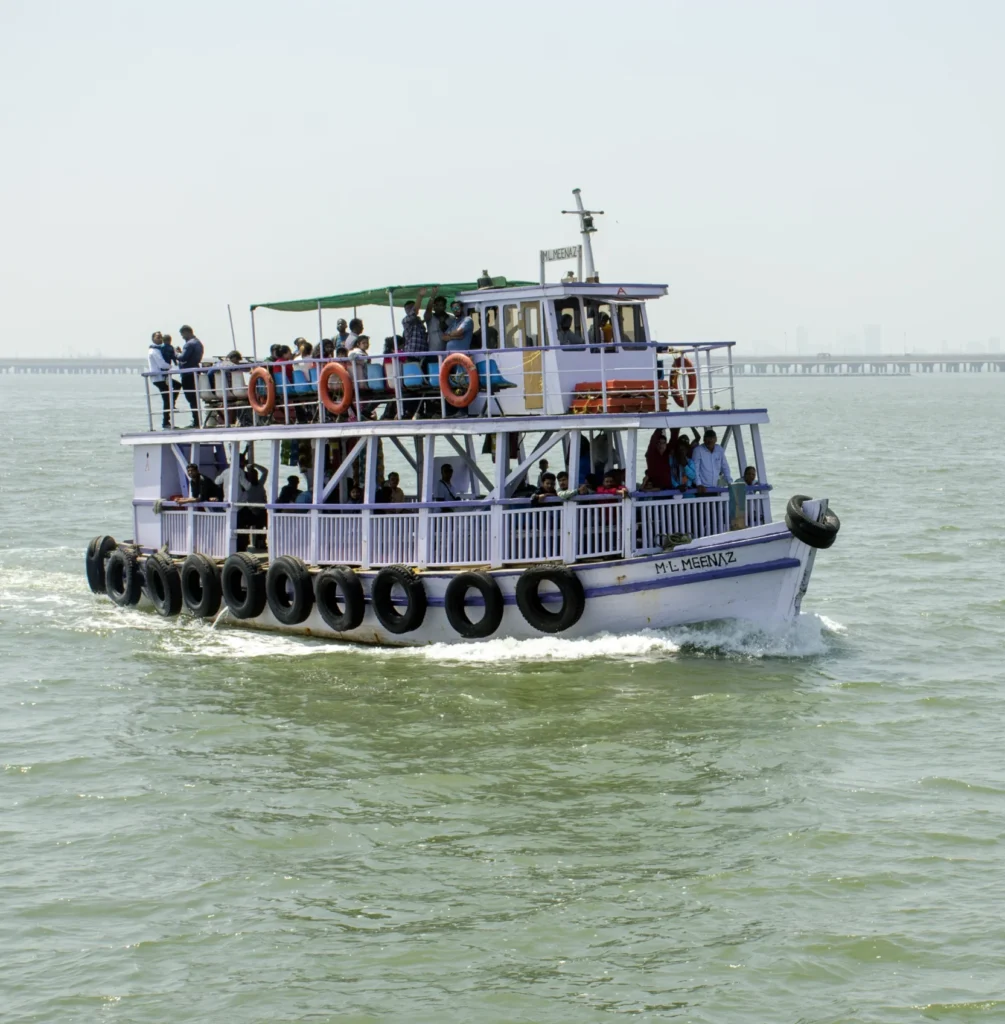
1. Introduction & Overview
Mumbai’s water transport serves two main purposes: daily commuting and tourism. The primary hubs for these services are the Gateway of India (Colaba), Bhaucha Dhakka (Ferry Wharf in Mazgaon), and the modern Belapur Jetty in Navi Mumbai.
For travelers, the sea route is the best way to reach Alibaug or the Elephanta Caves, as it bypasses the massive road traffic on the Mumbai-Goa highway, turning a 3-hour drive into a pleasant 60-minute cruise.
2. Why Water Transport Is Important in Mumbai
- Time-Saving: Reaching Alibaug or Navi Mumbai by sea can save up to 2 hours compared to the road.
- Vehicle Mobility: The Ro-Pax ferry allows you to drive your car onto the boat in Mumbai and drive it off in Alibaug.
- Tourism: It provides the only access to the Elephanta Caves, a UNESCO World Heritage site.
- Scenic Experience: It offers a panoramic view of the Mumbai skyline, the Taj Mahal Palace Hotel, and the historic Naval Dockyard.
3. History & Background
Water transport has been part of Mumbai’s history for centuries, starting with small wooden boats (machwas). The modern era began with catamarans and ferries from the Gateway of India to Mandwa. A major revolution occurred in 2020 with the launch of the M2M Ferries, India’s first high-capacity Ro-Pax service, which made it possible to travel with vehicles year-round. In 2023, the city introduced its first water taxi services, connecting Navi Mumbai directly to the heart of the city.
4. Types of Water Services
A. Ro-Pax Ferry (M2M Ferries)
- Route: Bhaucha Dhakka (Ferry Wharf) ↔ Mandwa (Alibaug).
- Features: All-weather, car-carrying, AC lounges, and pet-friendly.
- Capacity: Up to 500 passengers and 150 vehicles.
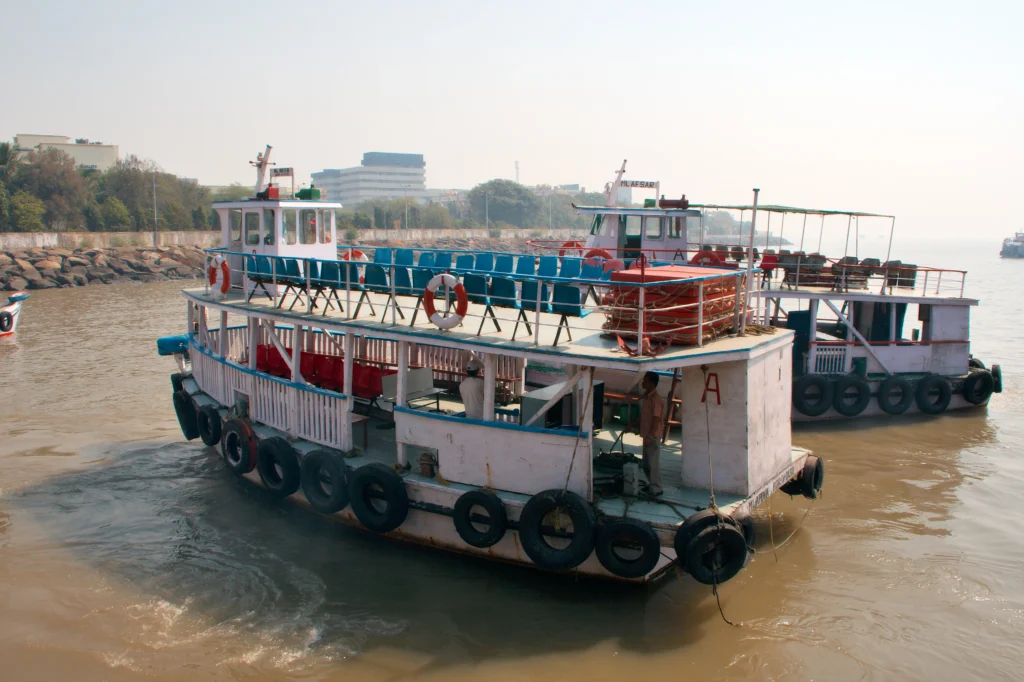
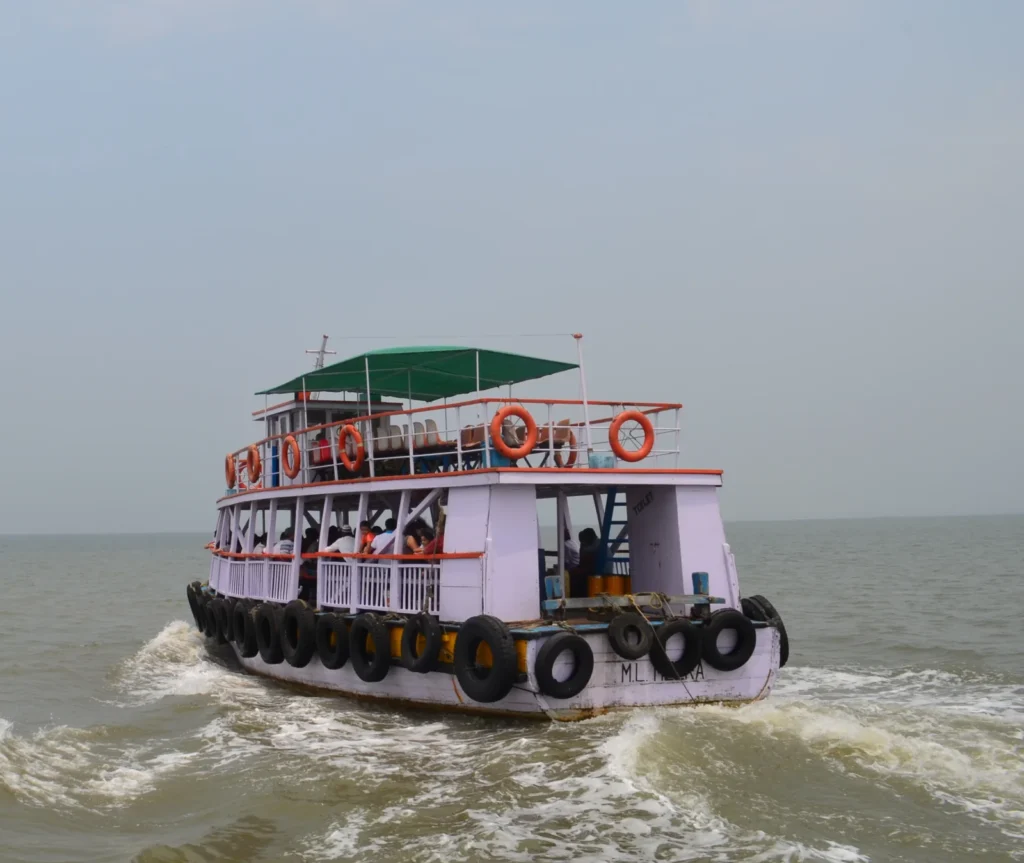
B. Passenger Ferries & Catamarans
- Operators: PNP, Maldar, and Ajanta.
- Route: Gateway of India ↔ Mandwa Jetty.
- Classes: Main Deck (Non-AC) and AC Upper Decks.
C. Water Taxis
- Route: Belapur ↔ Gateway of India / Elephanta.
- Speed: High-speed boats that cut travel time to under 60 minutes.
D. Heritage Ferries
- Route: Gateway of India ↔ Elephanta Caves.
- Note: These are typically slower, heritage-style boats that run every 30 minutes.
5. How to Use Mumbai Water Transport
- Select Your Port: Choose Gateway of India for passengers only, or Bhaucha Dhakka for the Ro-Ro (with vehicles).
- Reporting Time: Arrive at least 30–45 minutes before departure, especially if you are traveling with a vehicle.
- Security: All passengers and vehicles undergo a security check at the terminal.
- Boarding: For Ro-Ro, drivers follow staff instructions to park on the deck. Passengers then move to the seating lounges.
6. Ticket System & Fares
Passenger Fares (One-Way)
- Standard Ferry (Ajanta/Maldar): ₹135 – ₹250.
- Catamaran AC (PNP/Maldar): ₹290 – ₹315.
- M2M Ro-Ro (Passenger): ₹390 (Lounge) – ₹460 (Upper Deck).
- Water Taxi (Belapur-Gateway): ₹250 (Executive) – ₹350 (Business).
- Elephanta Ferry: Approx. ₹150 – ₹225 (Return).
Vehicle Fares (M2M Ro-Ro)
- Bikes/Cycles: ₹110 – ₹210.
- Cars: ₹1,020 – ₹1,200 (depending on size).
- Pets: ₹310.
How to Book:
- Online: Recommended for M2M Ferries (m2mferries.com) and Water Taxis (myboatride.com).
- Offline: Ticket counters are available at Gateway of India and Bhaucha Dhakka for same-day walk-ins.
7. Travel Timings & Frequency
- M2M Ro-Ro: Operates roughly every 2-3 hours from 6:15 AM to 7:15 PM.
- Passenger Ferries: Depart every 15–30 minutes from the Gateway during peak hours.
- Monsoon Note: Most passenger ferries (except the M2M Ro-Ro) close during the monsoon (June to September) due to rough seas.
8. Major Routes & Coverage
- Mumbai to Alibaug: The most popular route. From Mandwa Jetty, a free bus (included in PNP/Maldar tickets) takes you to Alibaug city.
- Mumbai to Elephanta: A 60-minute journey to the caves. Note: Closed on Mondays.
- Navi Mumbai Connect: Belapur to Gateway of India is the primary route for commuters avoiding the harbor line trains.
9. Tourist Experience & Local Tips
- The Upper Deck Experience: Pay the extra ₹50–₹100 for the Upper Deck on the Ro-Ro or catamarans; the sea breeze and unobstructed views are worth it.
- Seagull Feeding: During winter months, passengers often feed seagulls that fly alongside the ferries (though this is increasingly discouraged for environmental reasons).
- Avoid the “No-Show”: Ro-Ro tickets are non-refundable if you arrive late. Be at the gate 45 minutes early.
10. Safety Risks & Precautions
- Rough Seas: If you are prone to motion sickness, take medication 30 minutes before boarding.
- Life Jackets: Located under seats or in clearly marked lockers. In an emergency, wait for crew instructions.
- Electronic Items: Salt spray can damage cameras and phones; keep them in a bag when not in use.
11. Safety Rules (M2M & Water Taxi)
- IDs Required: You must carry a government-issued photo ID for all passengers.
- Prohibited Items: Inflammable liquids, explosives, and outside alcohol are strictly banned.
- No Smoking: Smoking and vaping are strictly prohibited on all vessels and at the terminals.
12. Things to Carry
- Sun Protection: Hat, sunglasses, and sunscreen.
- Digital Ticket: Physical prints are not required; show the QR code on your phone.
- Light Jacket: Even in summer, the sea breeze can get chilly during evening trips.
13. Travel Tips (Local Secrets)
- The “Sunset Sail”: Try to book the 5:00 PM or 6:00 PM ferry from Mandwa to Mumbai. The view of the sun setting behind the Mumbai skyline is world-class.
- Food on Board: The M2M ferry has a small restaurant. A Maggi or Samosa costs about ₹100–₹120—perfect for a quick sea-side snack.
- The “Dockyard” Shortcut: If heading to Bhaucha Dhakka, the nearest train station is Dockyard Road (15-min walk). Avoid the heavy road traffic in Mazgaon.
Forget the hassle and choose CABTAN—Mumbai’s most punctual and affordable cab service. Our trained drivers ensure a safe, reliable, and completely worry-free journey. Fill out the form below to book your ride now.